Developer interview · Part 4 of 12How to play
What Manuals and Moves are in Data2Dao? Baduanjin and how to learn a Move
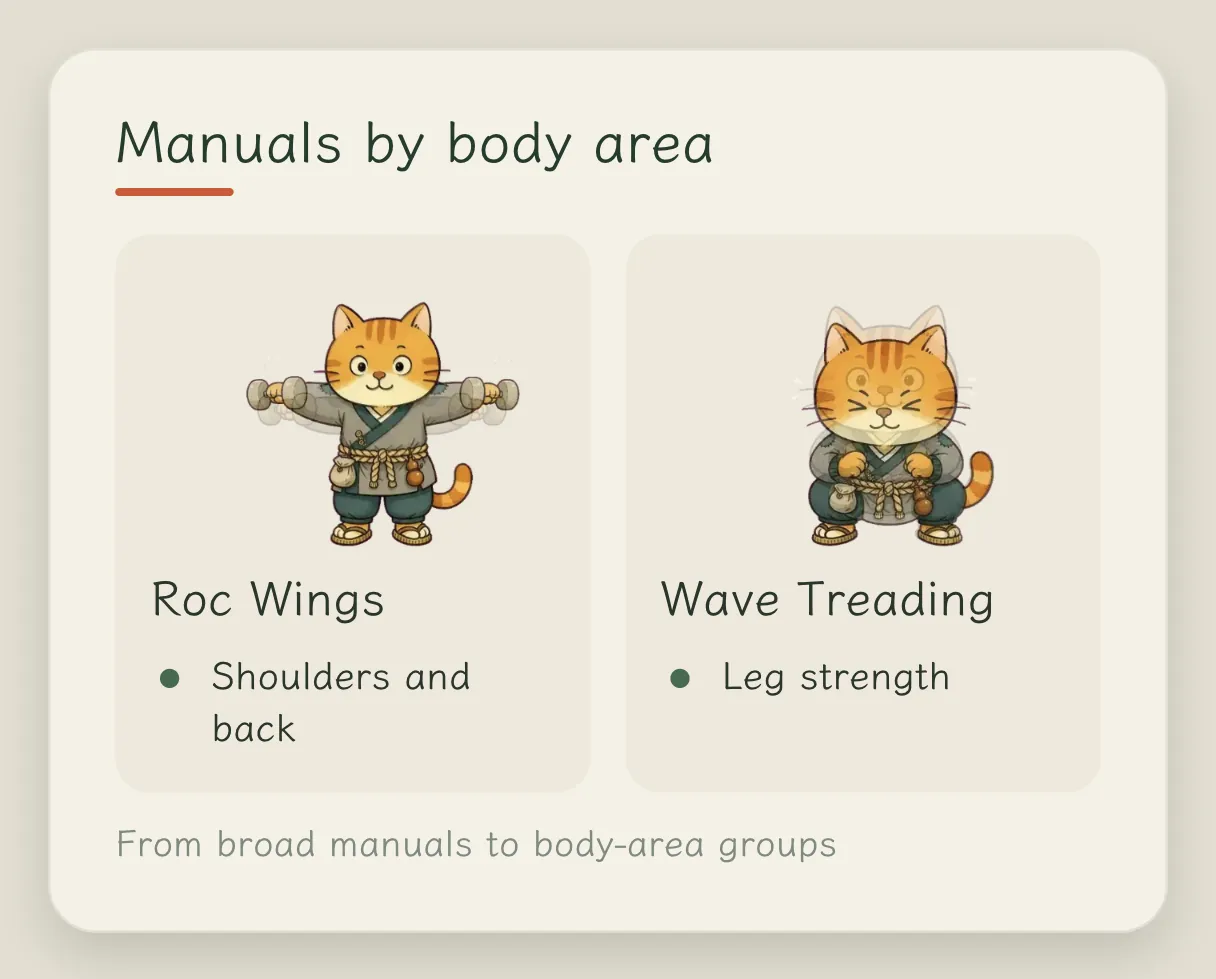
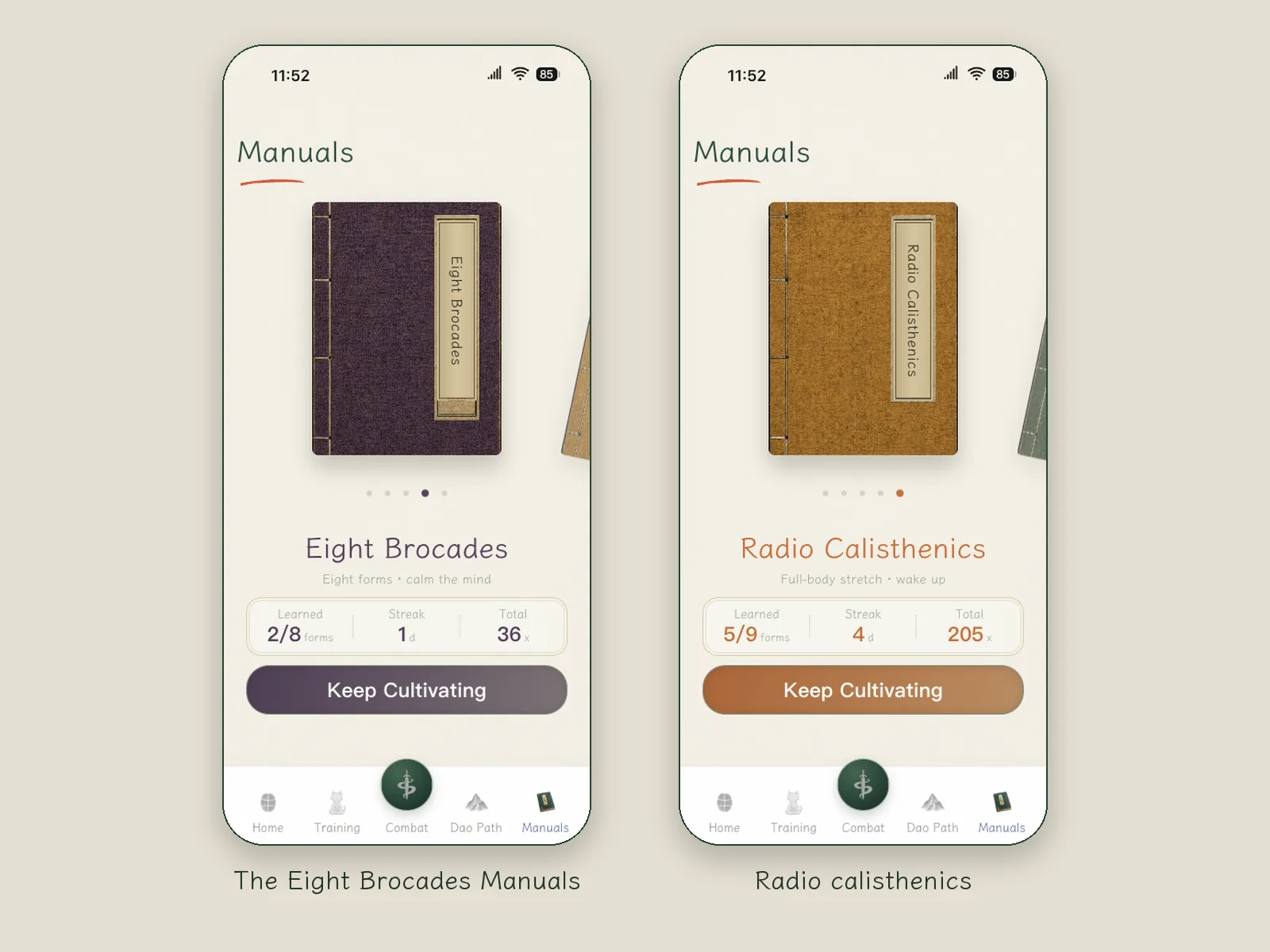
Data2Dao 1.6 splits its Manuals by body part into three books, Roc Wings, Lean Muscle Art and Wave Treading, plus two follow-along routines, Baduanjin and Broadcast Exercise 8. This post lists every Manual and Move and explains how you learn a Move, how to adjust the learning pace, and what to do when you only want to practice one particular movement.
Short answer
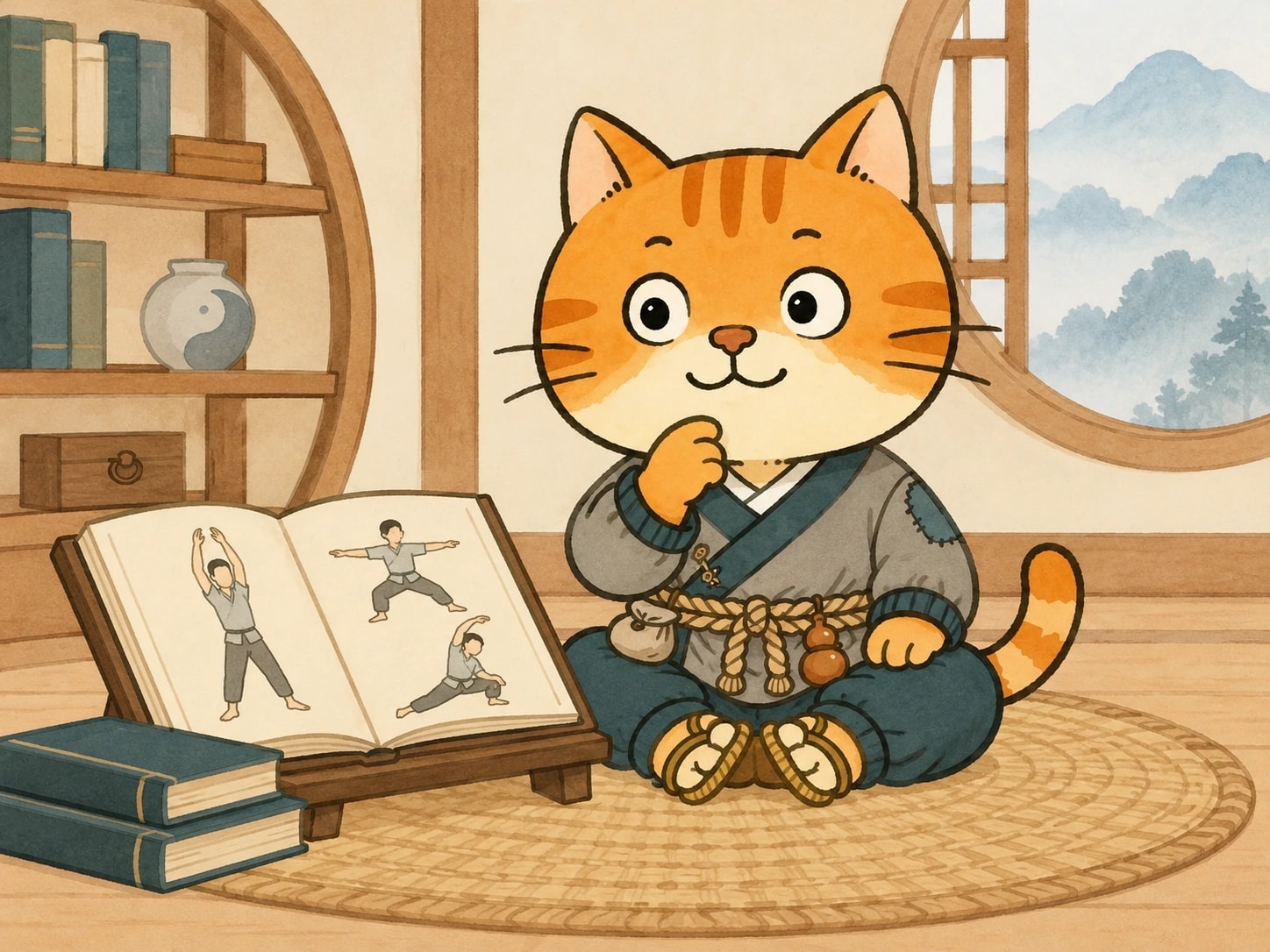
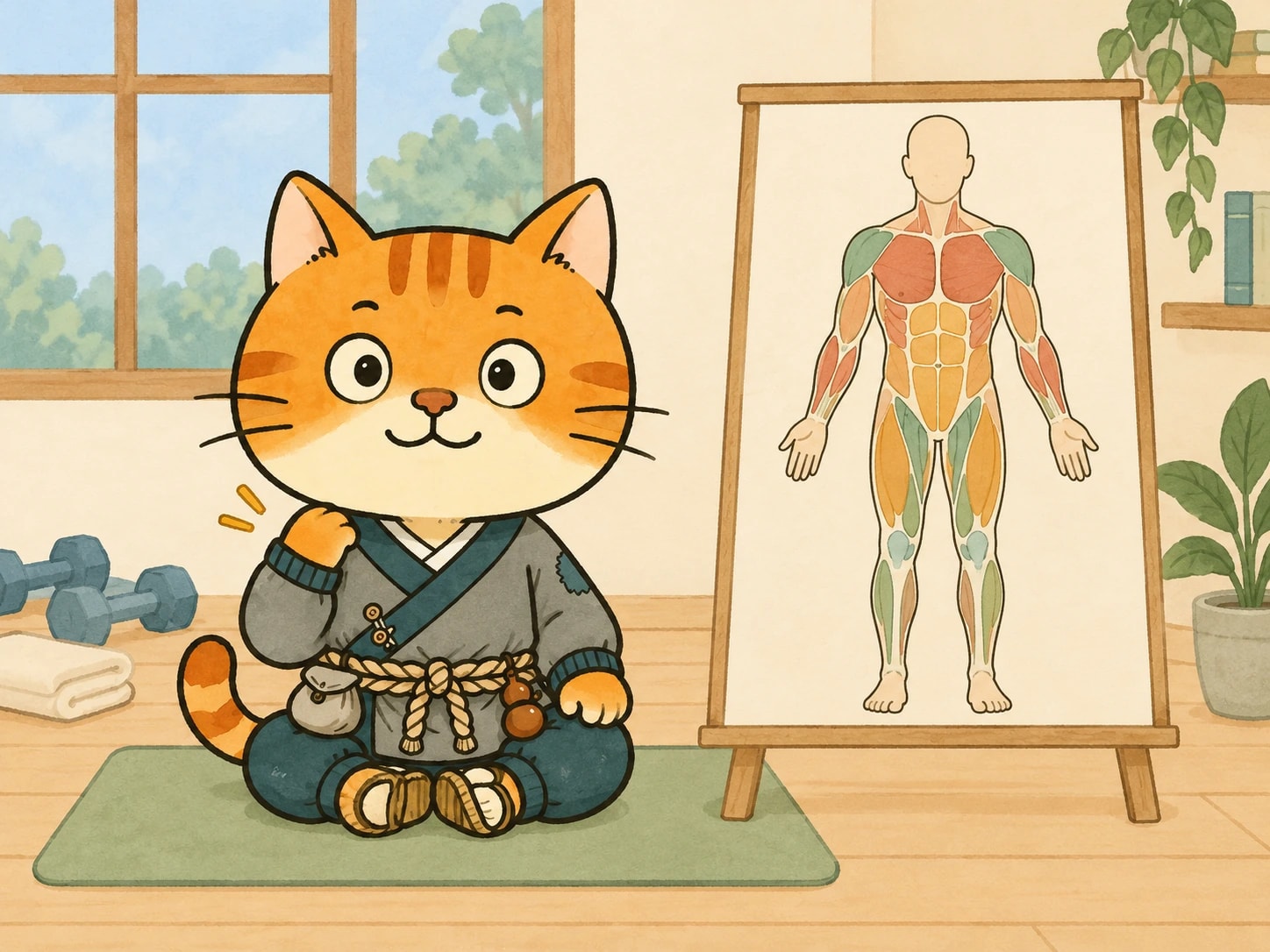
In version 1.6, the Manuals (training courses, shown as books) are split by body part into three: Roc Wings trains the shoulders, arms, chest and back, Lean Muscle Art trains the waist, abs and core, and Wave Treading trains the glutes, legs and ankles. There are also two follow-along routines, Baduanjin and Broadcast Exercise 8. When you learn a new Move, following the orange cat for 3 to 5 reps counts as learned, and after that you reinforce it in battle. You can set the learning pace yourself; the developer suggests learning at most one Move a day.
Key points
Manuals (App 1.6)
| Manual | What it trains | Notes |
|---|---|---|
| Roc Wings | Shoulders, arms, chest, back | Since 1.6 |
| Lean Muscle Art | Waist, abs and core | Since 1.6 |
| Wave Treading | Glutes, legs, ankles | Since 1.6 |
| Baduanjin | Full routine | Follow-along; individual forms are not recognized or counted |
| Broadcast Exercise 8 | Full routine | Follow-along; individual forms are not recognized or counted |
Moves
| Move | Main body parts |
|---|---|
| Up-and-Down | Both shoulders |
| Arm Swings | Both shoulders |
| Standing Jump Clap | Shoulders, heart and lungs |
| Side Stretch | Waist and abs, lower back |
| Squat | Thighs |
| Push-Up | Chest |
| High Knees | Thighs, hips |
| Squat Knee-to-Elbow | Waist and abs, lower limbs |
| Heel Raises | Calves |
| Overhead Pull-Knee | Waist and abs, hips |
| Wall Angel | Upper back, shoulders; only the arm path is checked |
Version 1.6 adds six new Moves: Standing Side Crunch, Wood Chop, Plank, Mountain Climber, Dragon Tail Swing and Dragon Hammer Swing. All of them have a movement demonstration and a teaching voice-over.
How the Manuals are divided
Does giving up those movements have any impact?
Not much. There are still plenty of movements. The biggest problem before was that they were scattered. It's better now, with full continuous routines like Baduanjin and the broadcast exercises. I made a few others too, found them too hard, and am keeping just these two for now.
The full routines start out locked and only open after you have practiced for a while. The reason is that quite a few people, the first time they use the app, find the orange cat too small to see clearly. These movements come quickly with a little attention, so I want everyone to get familiar with the basic Moves first and then unlock the full routines.
Also, in the first two versions the Manuals were called Longevity Arts and Body Tempering. Longevity Arts leaned toward light stretching, and Body Tempering was more like exercise. Later I found that split too coarse, and I had too many movements I wanted to put in, so I changed it to a split by body part: the one for the shoulders and back is called Roc Wings, and the one for the legs is called Wave Treading.
Is there a movement you wanted to make and gave up on in the end?
Whatever the camera can't see is hard. I really wanted to make a basic sword routine, but it's too complex and involves a lot of side-to-side travel, so I set it aside.
How to learn and how to practice
Practice familiar movements more, or hurry to learn new ones?
That depends on user feedback. Right now you can set the learning pace yourself, for example one Move a day or one Move every two days, and the app estimates how many days it will take to learn them all. Personally I suggest learning at most one Move a day.
When you learn a new movement, when does it count as “learned”?
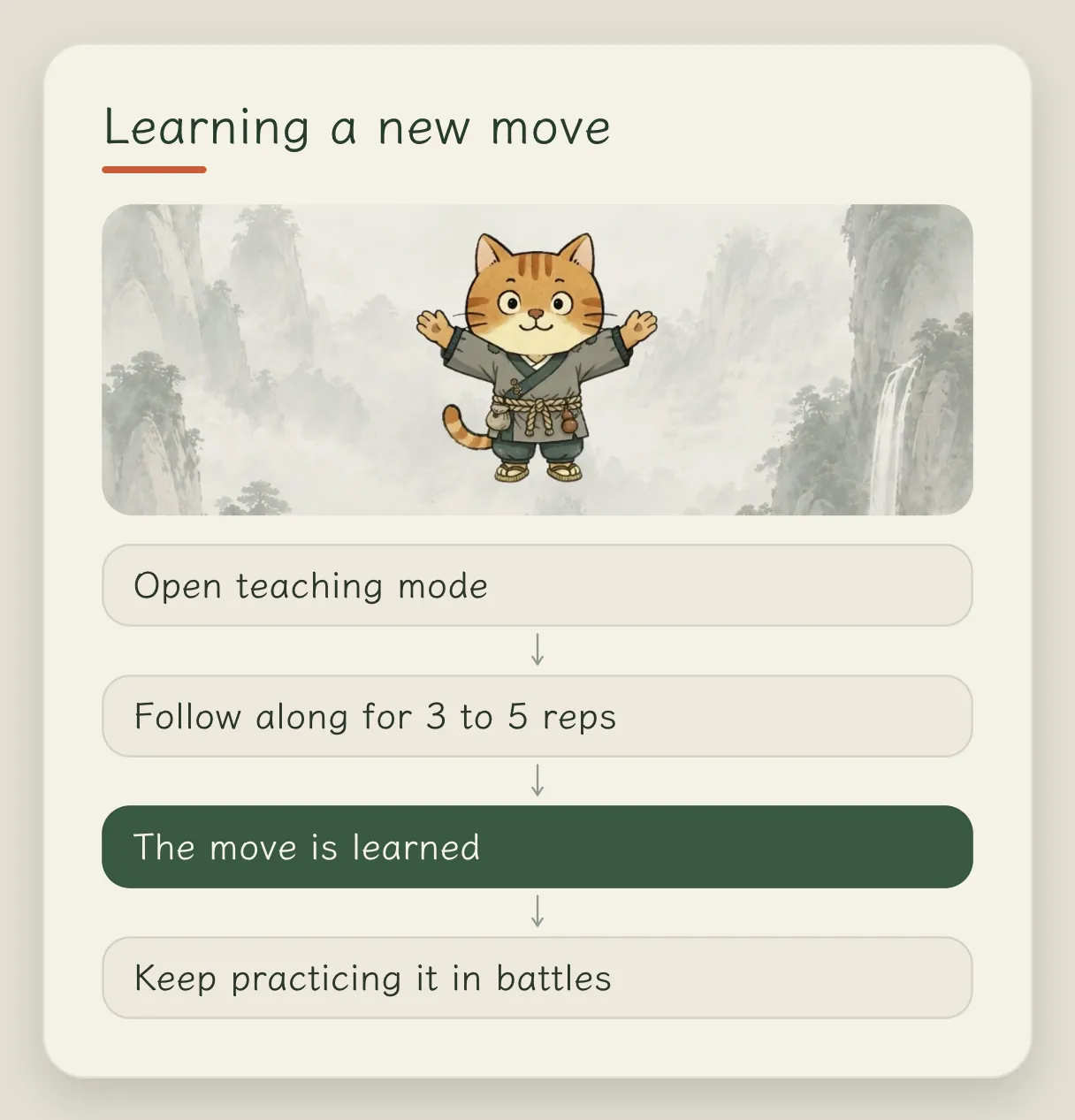
When you learn a new Move you go into a tutorial. Follow along for 3 to 5 reps and it's marked as learned, and after that you keep reinforcing it in battle. Most of the movements are simple; do one five times and you've got it.
What do you do when you really want to practice one particular movement?
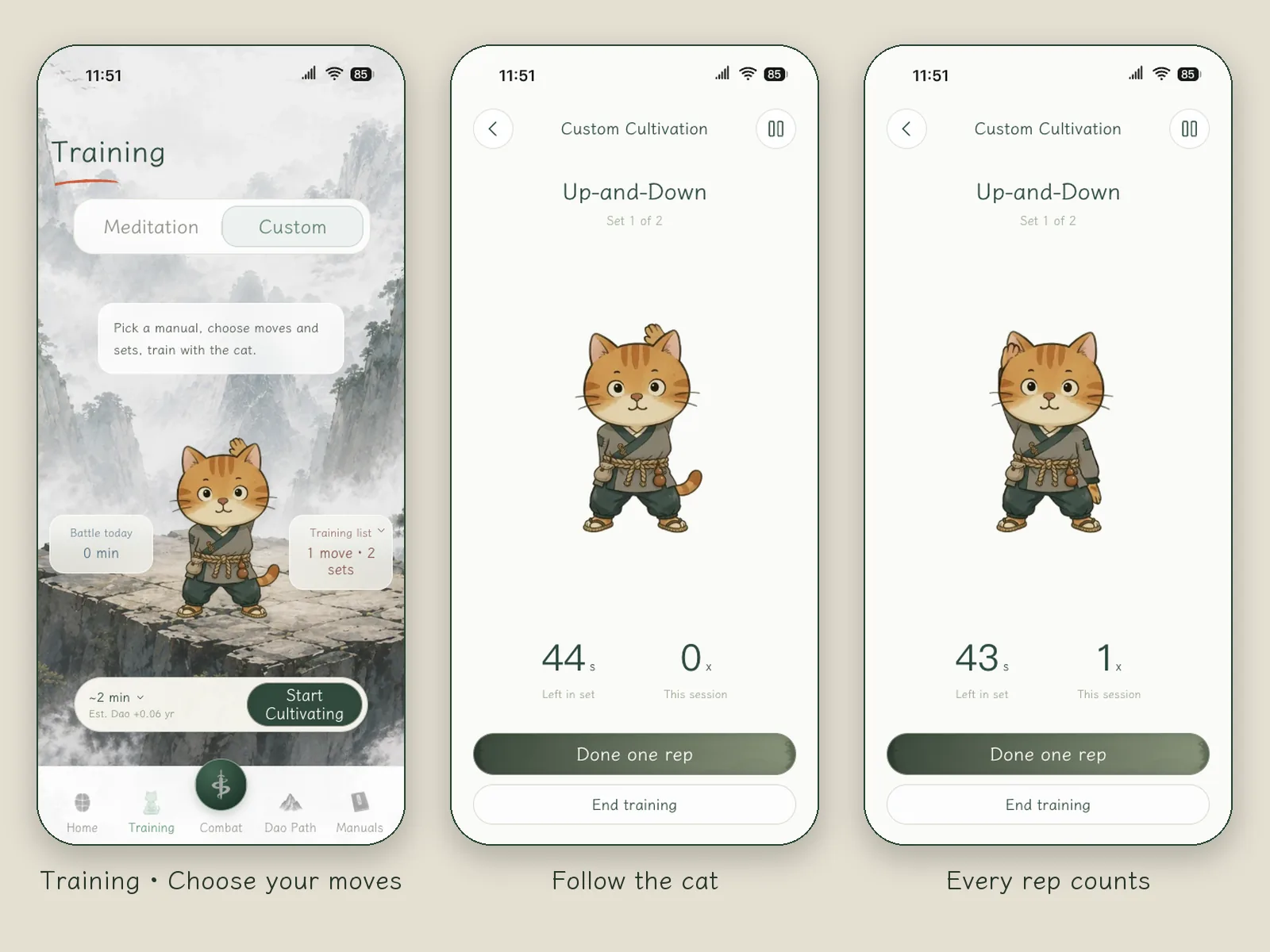
Say I really want to practice Wall Angel. I open the Train tab, go into Custom Cultivation and select Wall Angel.
Which Move is your own favorite?
Standing Jump Clap. It takes no running or jumping, and it works both the shoulders and the back.
Three movements you can try right now
Halftime break: stand up and move for a minute
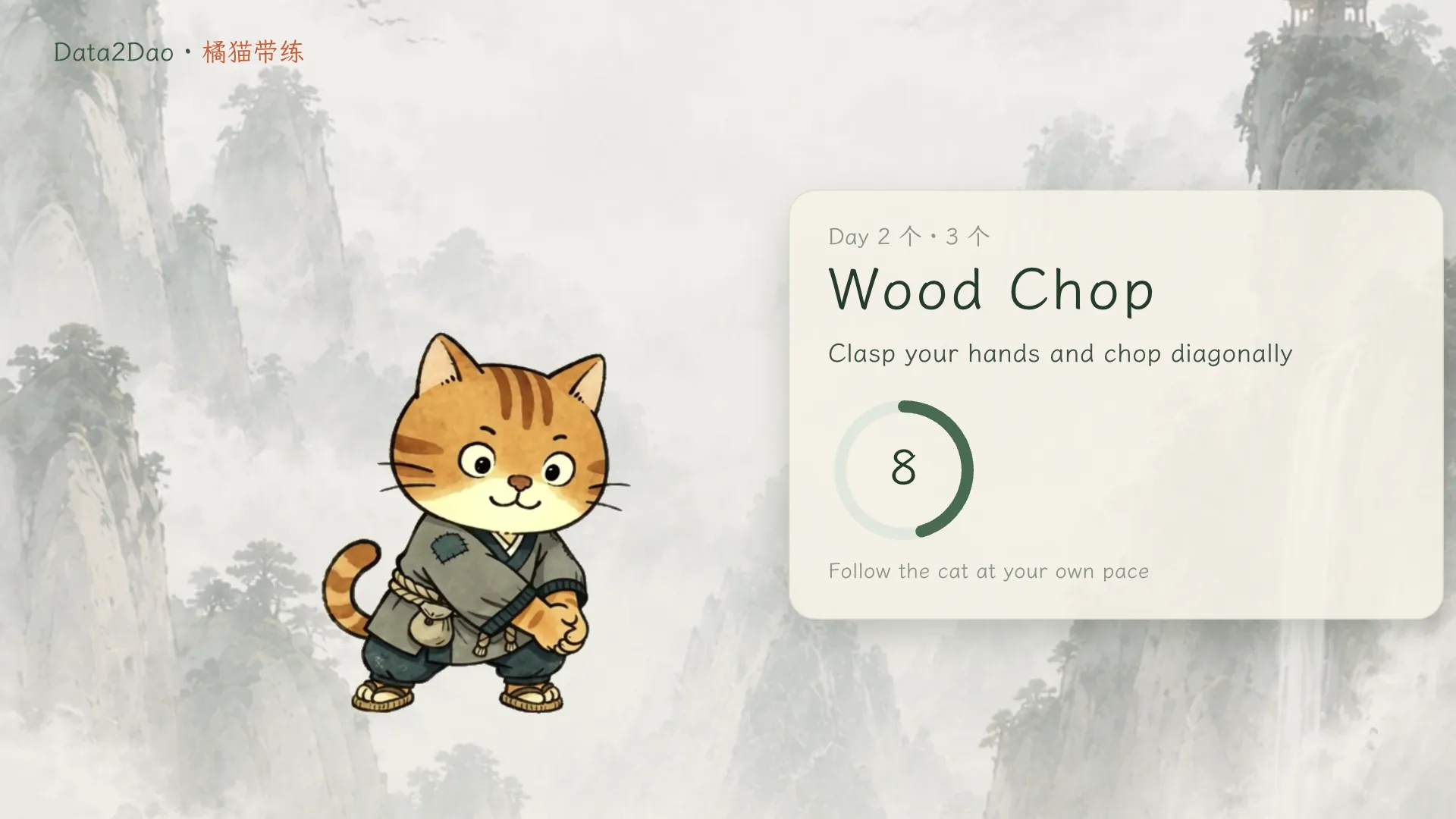
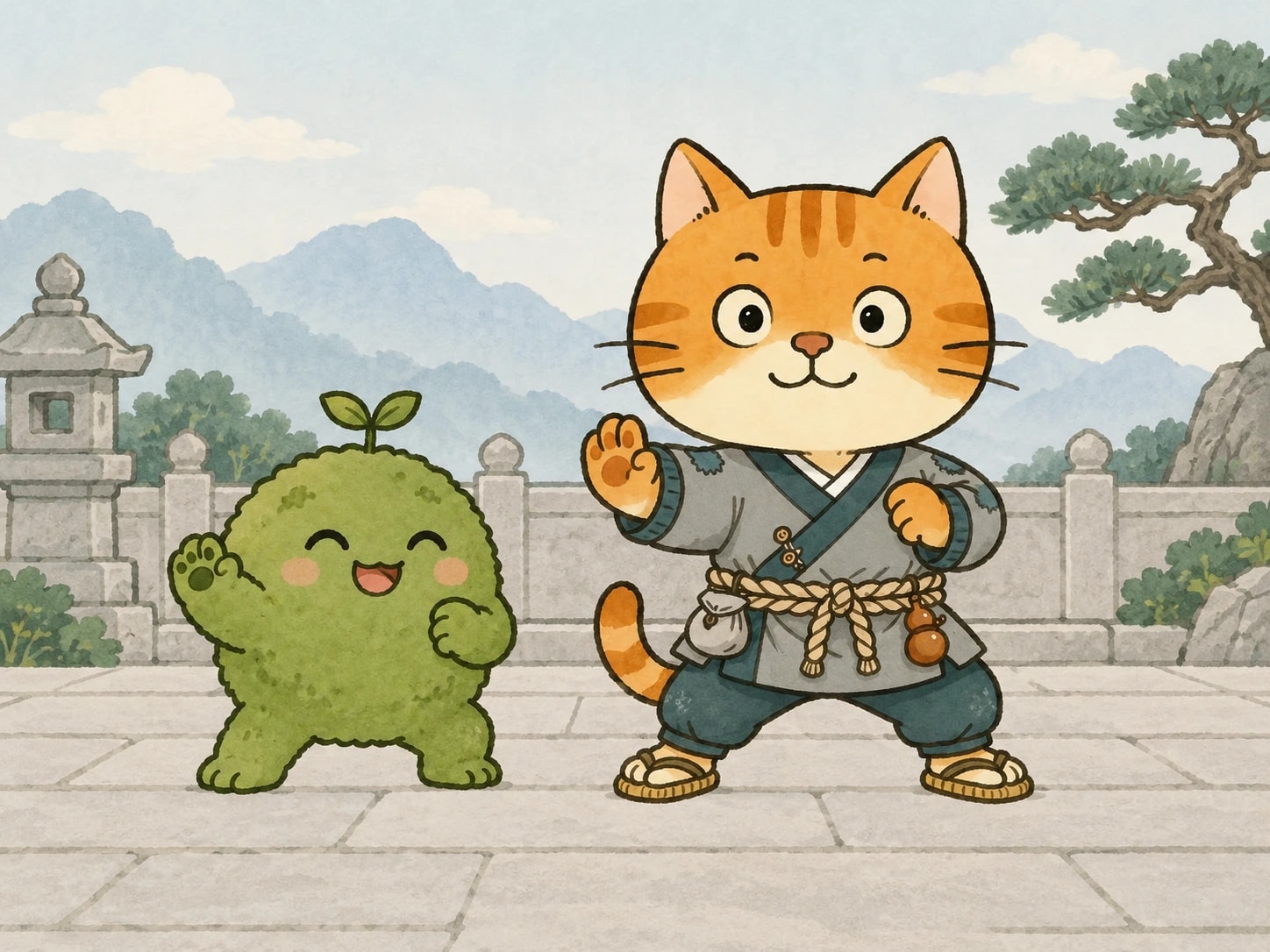
Video 26:33. By this point the conversation has run for nearly half an hour, and the orange cat leads three movements: Standing Jump Clap, Wood Chop and Side Stretch, none of which needs jumping. If you have read this far, you can stand up and do a few reps too.
FAQ
Are reps counted in Baduanjin and the broadcast exercises?
No. These two are follow-along routines: you follow the orange cat through the whole routine, and individual forms are not recognized or counted.
How many Moves can I learn in a day?
The developer suggests at most one Move a day. You can set the pace yourself, for example one Move a day or one Move every two days.
What if I only want to practice one particular movement?
Open the Train tab, go into Custom Cultivation and select the Move you want to practice. A Move has to be learned first before you can select it.
How does Wall Angel judge whether I did it properly?
It checks only the path of your arms. It does not judge whether your back is against the wall.
Related articles
Done reading? Stand up for three minutes
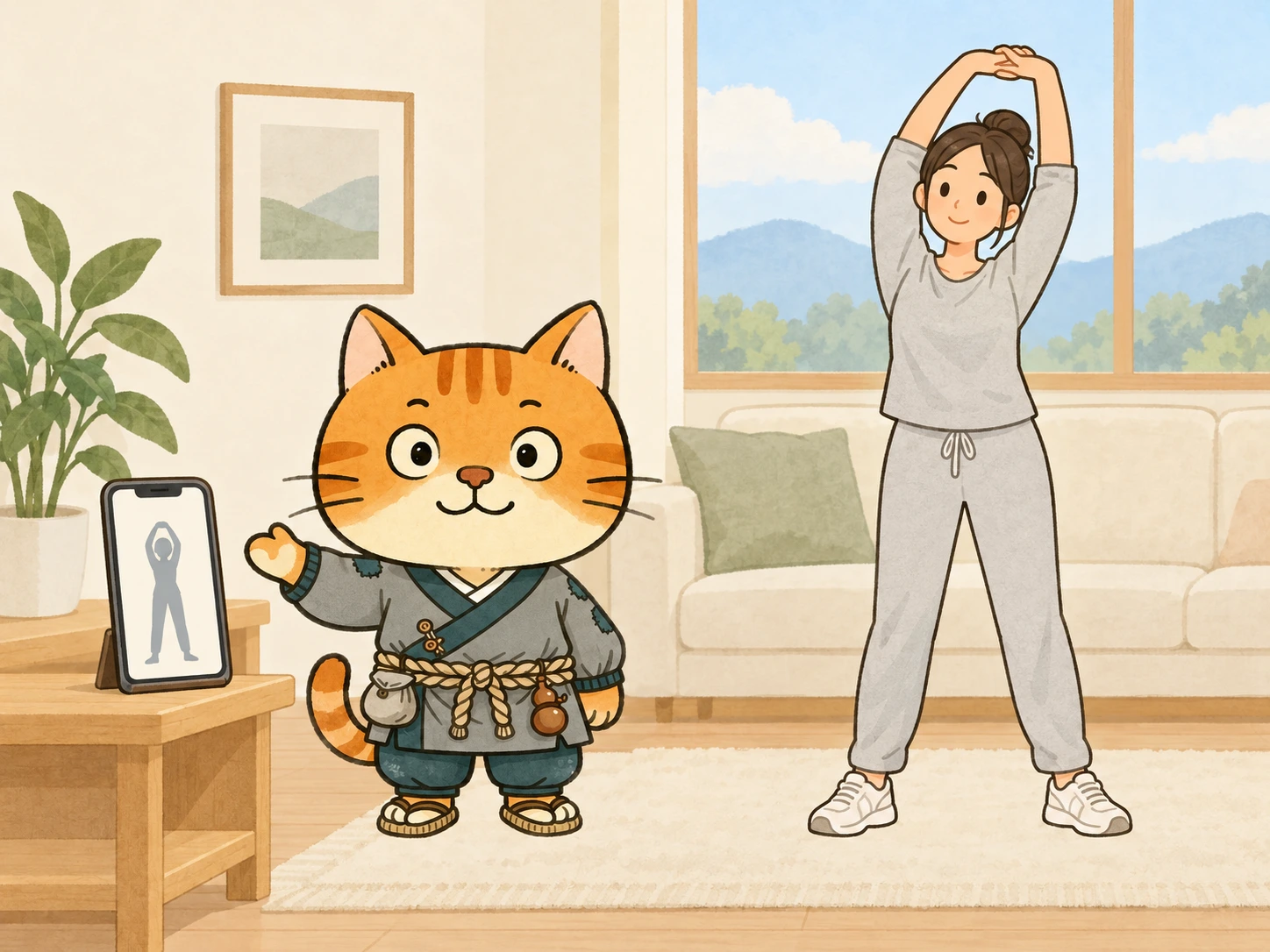
Prop your iPhone up and follow the cat for a few moves. Free to download; the annual plan includes a 7-day free trial.