
Developer interview · Part 12 of 12Why it works this way
Who made Data2Dao? One indie developer's year on a gamified fitness app
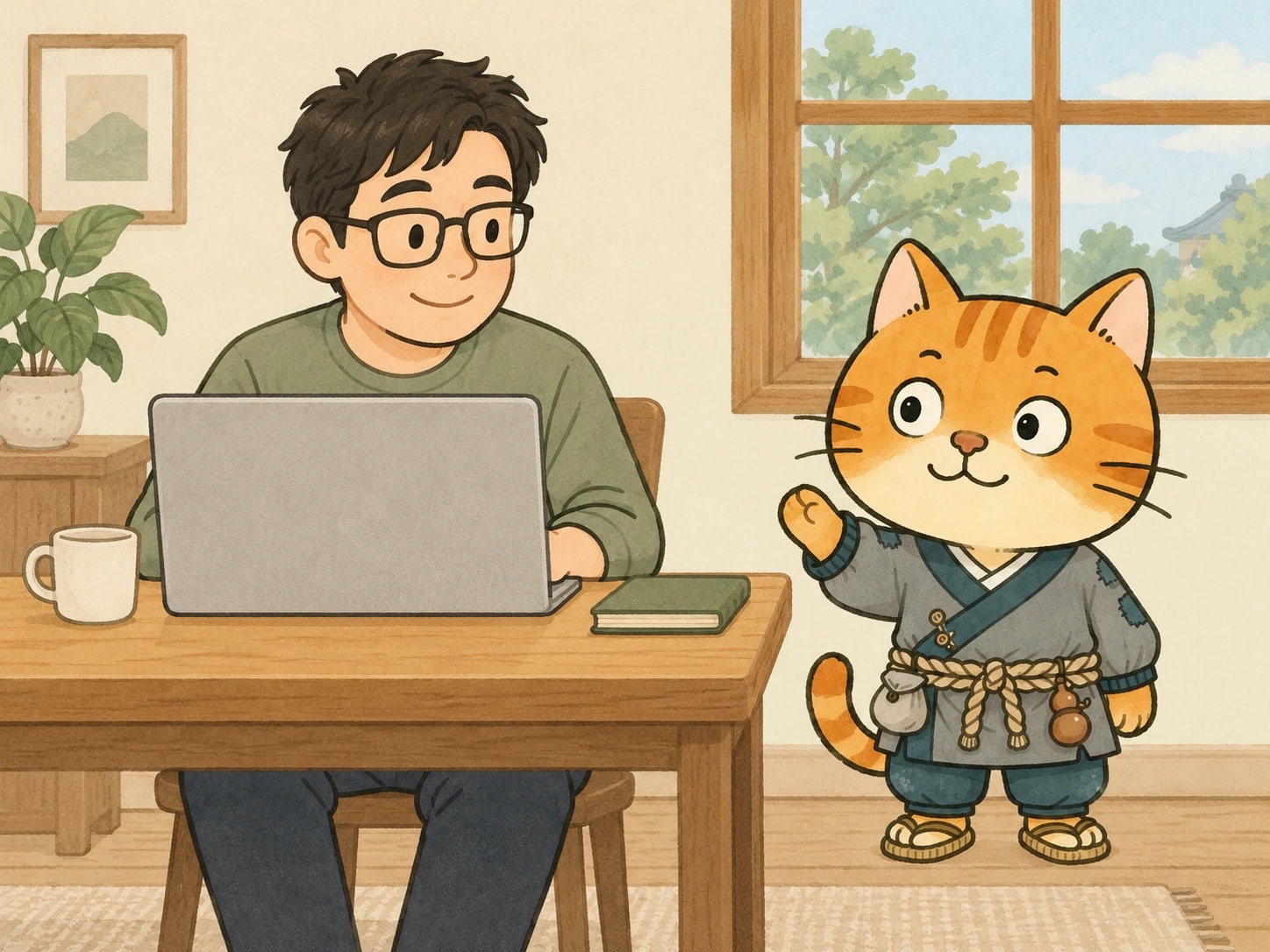
Data2Dao was built by indie developer Johnny. Work started in mid-2025, stopped for several months, and the app launched on September 28, 2026. This post covers where it got stuck, how an alarm clock that you can only turn off by doing push-ups became the turning point, and why he needed this app himself.
Short answer
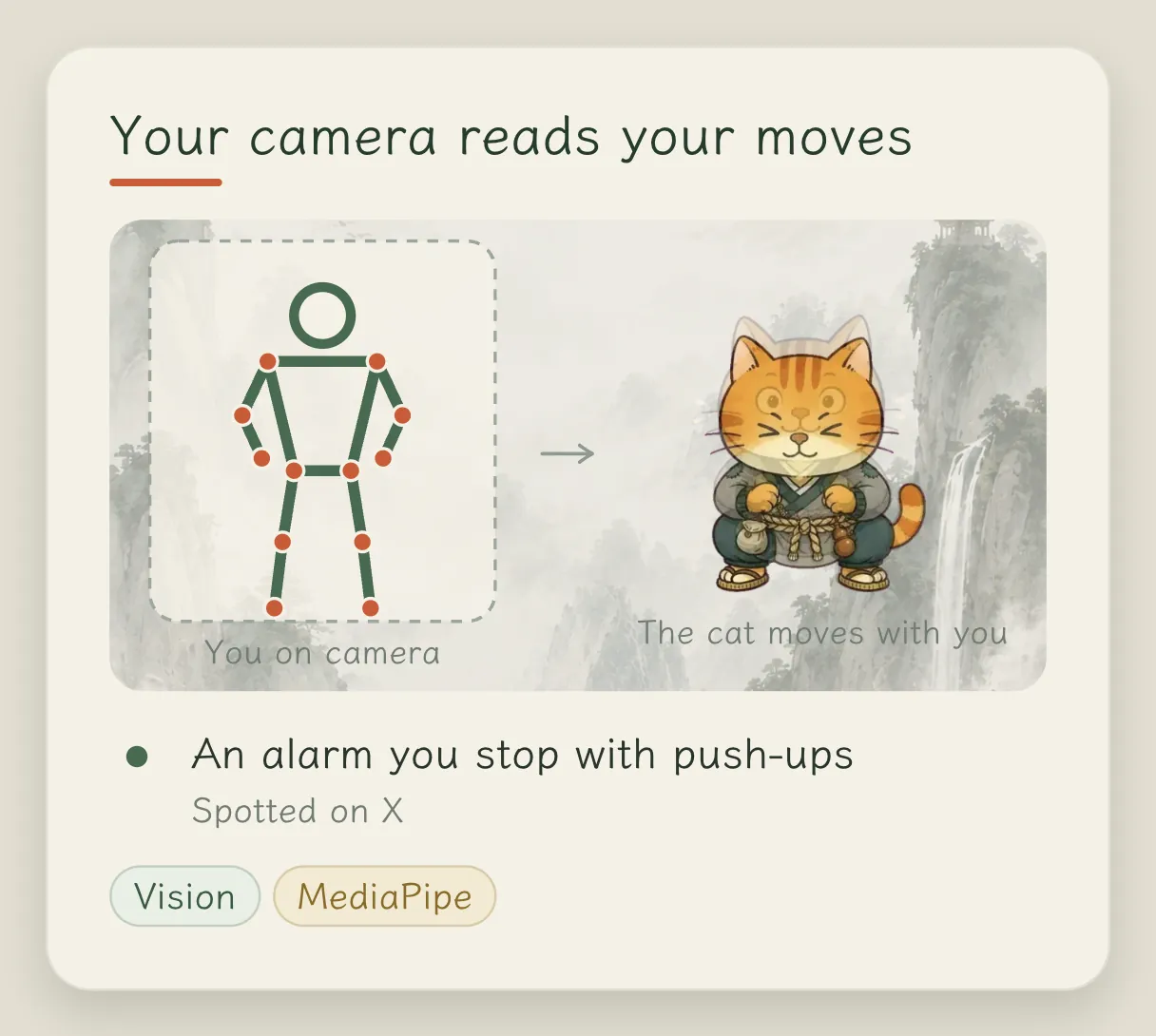
Data2Dao was built by indie developer Johnny. Work started in mid-2025, stopped for several months, and the app launched on the App Store on September 28, 2026. What held it up was the “battle”: all the exercise happened outside the app, and there was nothing to play inside it. The turning point was an alarm clock that you can only turn off by doing push-ups. It made him think of using body pose recognition through the phone's camera to turn the movement itself into the battle.
Key points
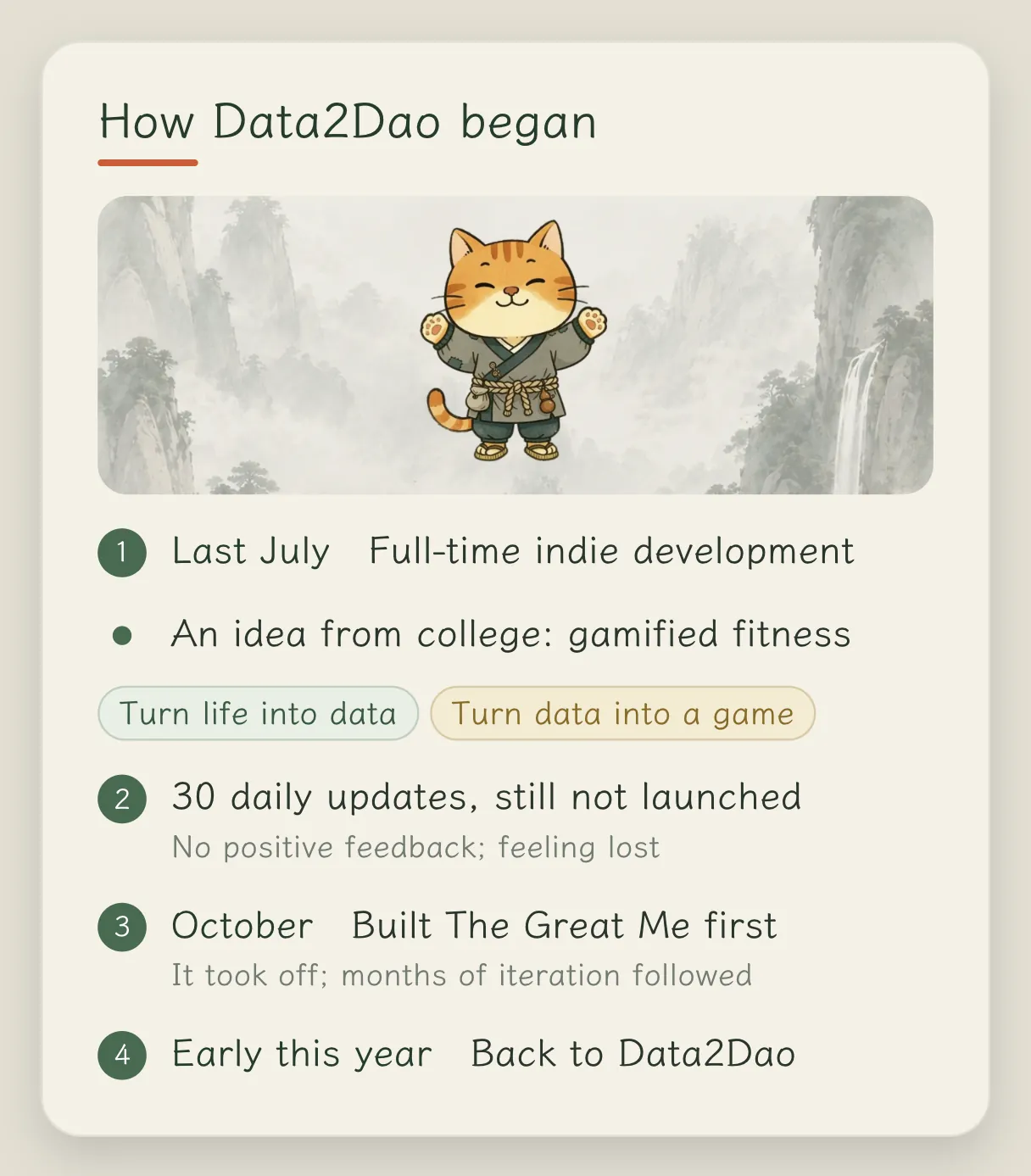
| When | What happened |
|---|---|
| Around July 2025 | Went full-time as an indie developer, started building Data2Dao, and posted a development log for 30 days in a row |
| October 2025 | Released another app first, The Great Me; Data2Dao stalled |
| Early 2026 | Came back to Data2Dao |
| After that | Came across an alarm clock on X that you can only turn off by doing push-ups, and settled on camera battles |
| September 28, 2026 | Launched on the App Store |
| October 11, 2026 | Version 1.6 released; this interview was recorded the same day |
- The original slogan: turn life into data, turn data into a game. It comes from a startup project from his undergraduate years.
- Movement recognition: Apple's Vision framework, done on the phone itself.
- Publisher: Dongguan Tuesday Technology Co., Ltd.
From idea to standstill
When did you first want to make Data2Dao?
The earliest was around July 2025, when I had just started doing indie development full-time. Back then I kept wanting to pick up a startup project I had worked on as an undergraduate. Its direction was gamified fitness, and the slogan at the time was “turn life into data, turn data into a game”.
I posted a development log for 30 days in a row, but the app never launched and there wasn't much positive feedback, so I felt lost. After two months of working on it I couldn't hold out any longer, and in October I released another app first, The Great Me. To my surprise it was well received, and I went on iterating on it for more than half a year. It was only in early 2026 that I had time to come back to Data2Dao.
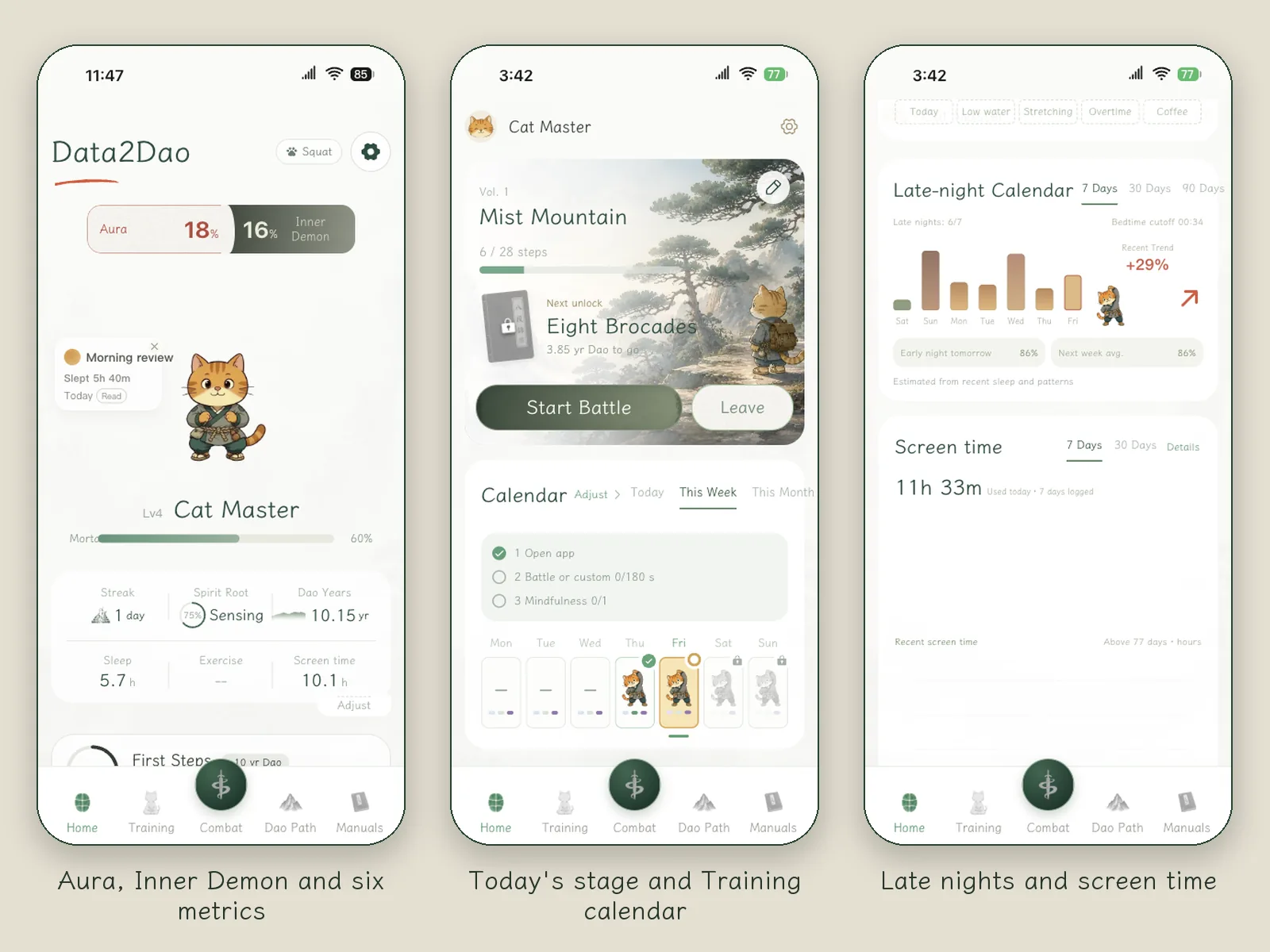
It didn't work out back then because I hadn't thought through the core, the battle. The first idea was simple: import the data from Apple Health and let the orange cat do the visualization and insights. But just looking at data rarely changes how you live. Running, working out, all of those “battles” happened outside the app, and inside the app there was nothing.
Did you work on it straight through from the start until now?
No, there was a long break in the middle. Around October and November 2025 I was really frustrated. I didn't know what change this app could actually bring to people.
Now it's quite complete. I redid the home screen alone dozens of times, and the current version is cute and its guidance is clear. Next comes subtraction: there are already a lot of ways to play, so people need to see at a glance what to do today and get through today's stage faster.
The turning point: an alarm clock
What made you figure out how the battle should work?
One day I was scrolling X and came across an alarm clock that you have to do push-ups to turn off. It clicked right away: body pose recognition on a phone can already do this, and this could be our battle.
Of course it couldn't be only push-ups. I hadn't worked out which movements to include yet. There were just a few Moves I especially wanted in, and the first was Standing Jump Clap. My neck and shoulders have always been tight, and the massage therapist who helps me loosen up taught me this movement. A few reps a day gets my shoulders and back moving.
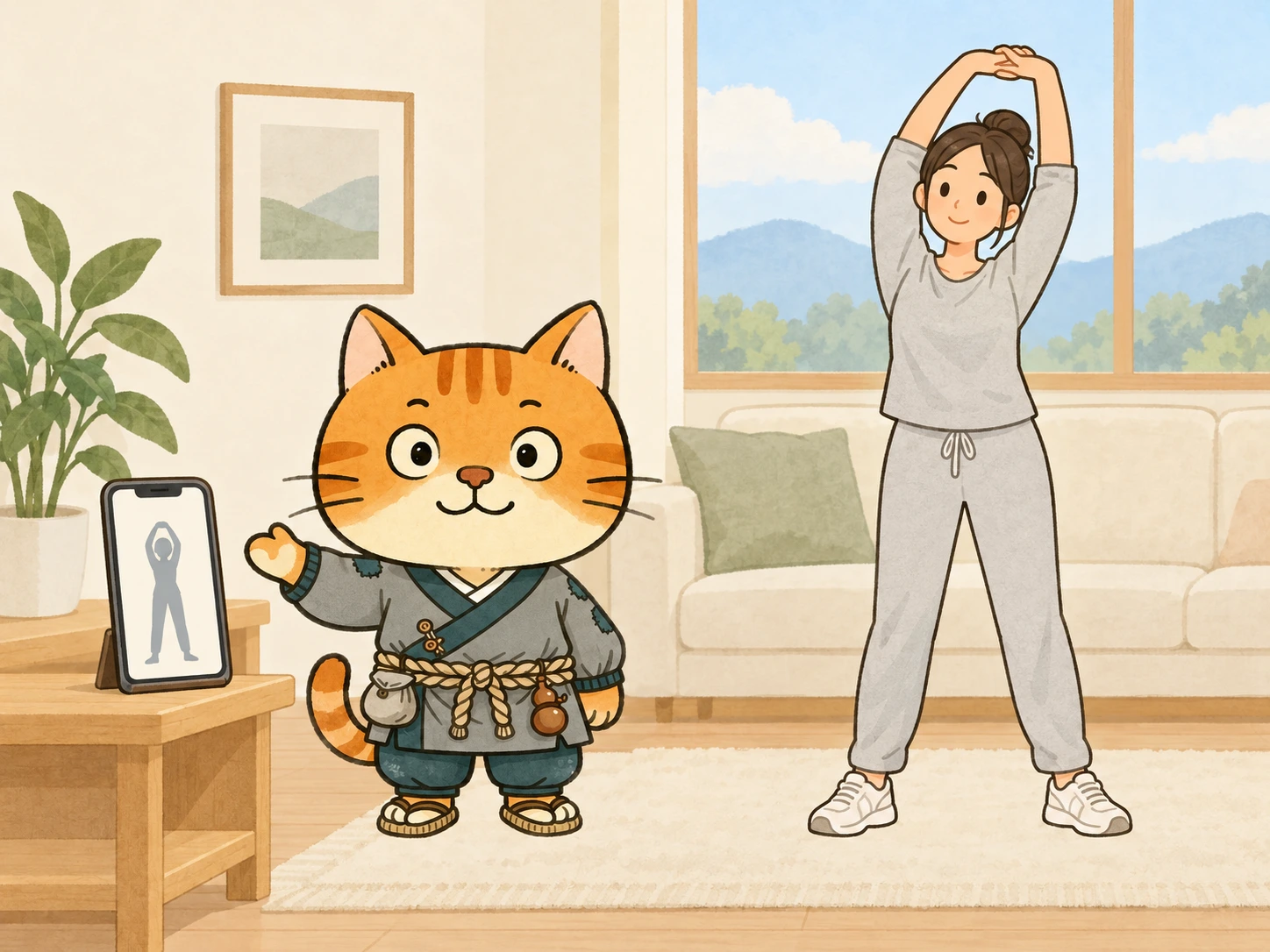
So the direction was set: the orange cat is the embodiment of your physical state, you follow it through the movements, and as in a roguelike game you keep moving forward and fighting monsters along the way. It has three sides: fitness, game, and the culture and visuals of cultivation (xianxia). How to balance the three took a lot of back-and-forth afterward.
He is a user himself
You sit at a computer every day too. How is your body doing?
Honestly, it was only after making this app that I started to face the fact that I need to move more. I bought dumbbells and they sit right beside me, but running a company on my own, I keep thinking that what I'm working on is fun and I need to get it finished, and it drags on into the night. By bedtime my shoulders and back are so tight I can't sleep.
I've tried a foam roller and all kinds of release exercises, and in the end I still had to get a massage therapist to work on it before it eased up a little. My own experience is that massage only helps for a while. Fundamentally you still have to train more yourself and build your muscles' capacity back. This is a need I feel firsthand, and it's the reason I made this app.
What comes next
If you could get only one thing right in the next month, what would you do first?
Fixing all the small issues: where people get stuck, which details don't feel smooth. First on the list is onboarding, to lower the barrier to getting started. There isn't enough data yet, so I really hope more people come and play and give more feedback, so that I can make a better version.
FAQ
Who made Data2Dao?
Indie developer Johnny. The publisher is Dongguan Tuesday Technology Co., Ltd. His previous app is The Great Me, and he has also made a flip-to-start focus timer app.
How long did it take to make?
About a year. Work started in mid-2025, stopped for several months, and the app launched on the App Store on September 28, 2026.
What technology does the movement recognition use?
Apple's Vision framework, done on the phone itself. The camera image is not saved or uploaded.
Related articles

Done reading? Stand up for three minutes
Prop your iPhone up and follow the cat for a few moves. Free to download; the annual plan includes a 7-day free trial.