
Developer interview · Part 2 of 12How to play
Desk job, only a few minutes a day to move? Who Data2Dao is and isn't for
Data2Dao is positioned as a few minutes of light exercise a day: after you get home from work or before your lunch break, stand the phone up and play one stage of 3 to 8 minutes. This post explains who it is for, who it is not for, where to practice, and why the developer compares it to a vitamin.
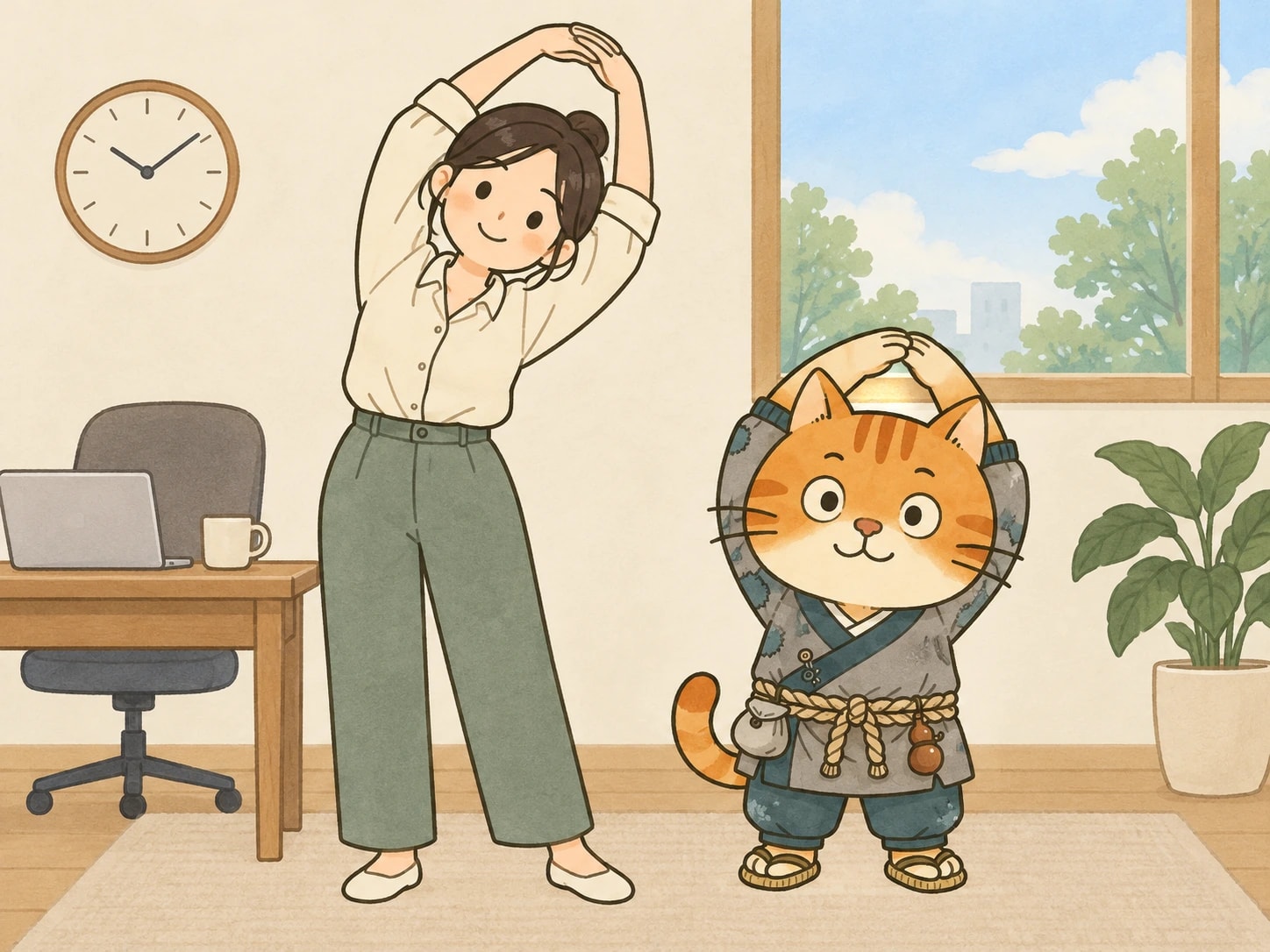
Short answer
What Data2Dao offers people who sit for long hours is a few minutes of light exercise a day: after you get home from work or before your lunch break, stand the phone up and play one stage of 3 to 8 minutes to loosen up your shoulders, back, waist and legs. The developer compares it to a vitamin: a small dose, taken over the long term. It is not a great fit for people whose goal is weight loss, muscle gain or advanced professional training.
Key points
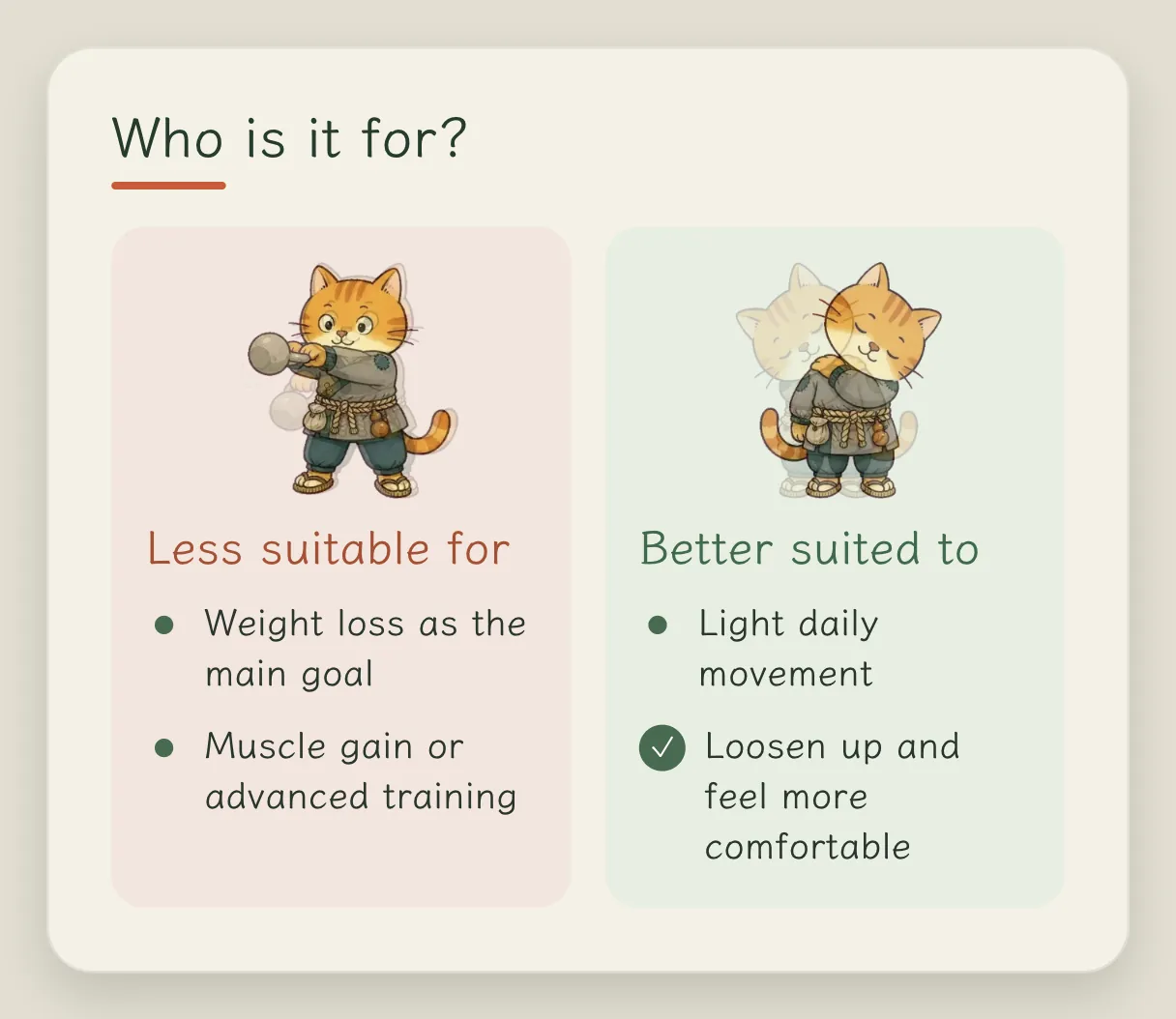
- A good fit: people who are at a desk in front of a computer every day and want to move for a few minutes a day; people who like game-style feedback; people who have only an iPhone or iPad and a small patch of open floor at hand.
- Not a fit: people whose goal is weight loss, muscle gain or advanced professional training; people who want strength training with equipment; people who need a human coach to correct their movements in real time; people who can only practice sitting down; Android users.
- How long each time: a stage can be 3, 5 or 8 minutes, your choice.
- Where to practice: the developer recommends after you get home from work, or before your lunch break or after a meal.
- Movement intensity: most movements can be done standing, with no running or jumping, and the ones with a large range of motion can be skipped.
- What it does not do: it does not make medical diagnoses and is not a substitute for treatment.
How long to practice each day, and who it's not for
About how much time does it take each day?
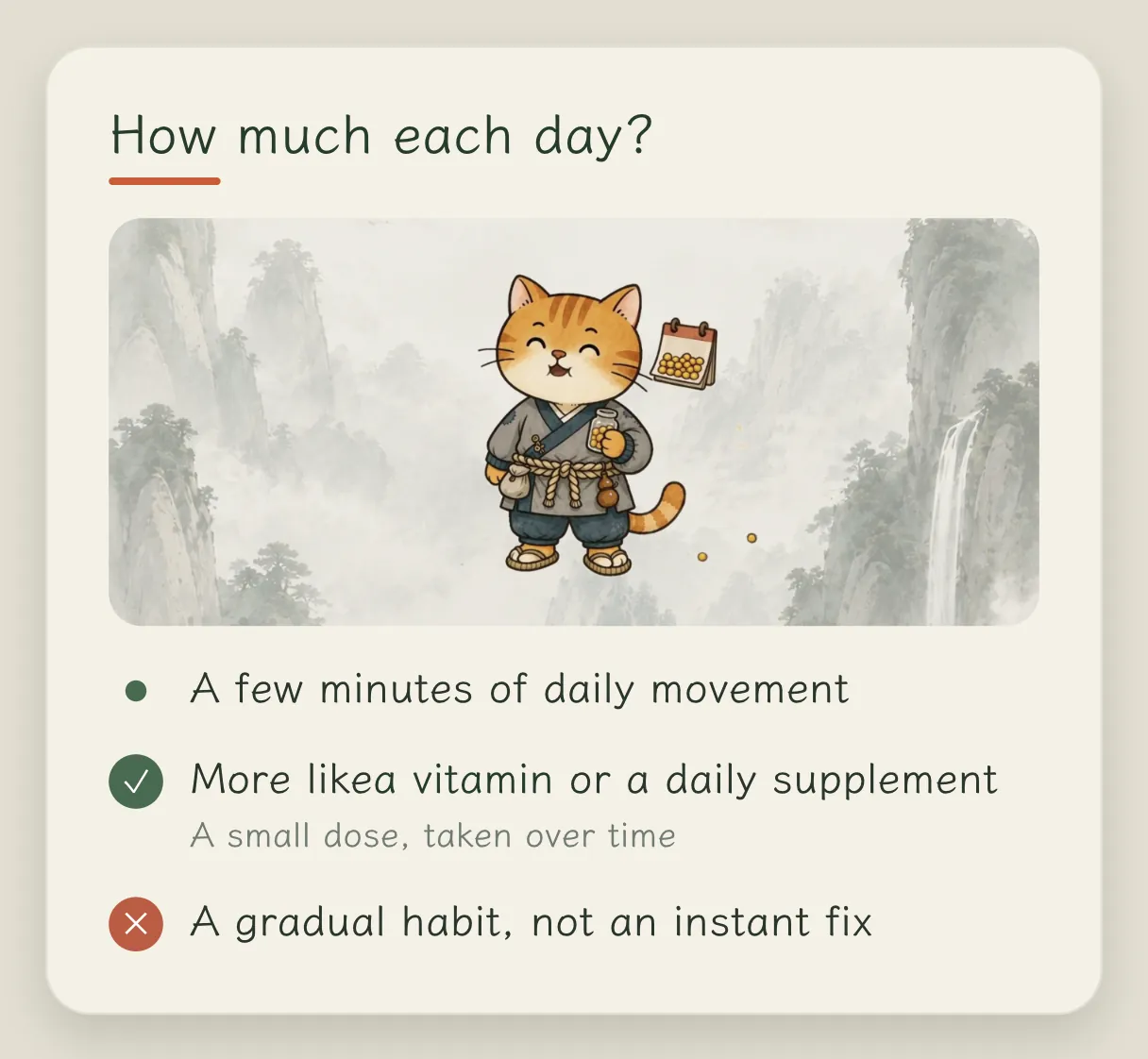
A few minutes a day, to limber up. I think of it more as a vitamin: a small dose that you take over the long term. It can't be strong medicine, and taking it won't work right away.
Who is it not a great fit for?
People whose goal is weight loss, or who want to build muscle or do advanced professional training, may not find it a great fit. It's a light exercise app. What I most want to do is help everyone open up the whole body and feel more comfortable.
Who should use it most, and where to practice
What kind of person should be using it most but hasn't come yet?
People like me. At a desk in front of a computer every day, with a tight neck and shoulders, an intense workload and not much time. Roughly 28 to 40 years old, grew up reading xianxia (cultivation) novels, and also need to move their bodies.
Can you follow along at your desk during the workday?
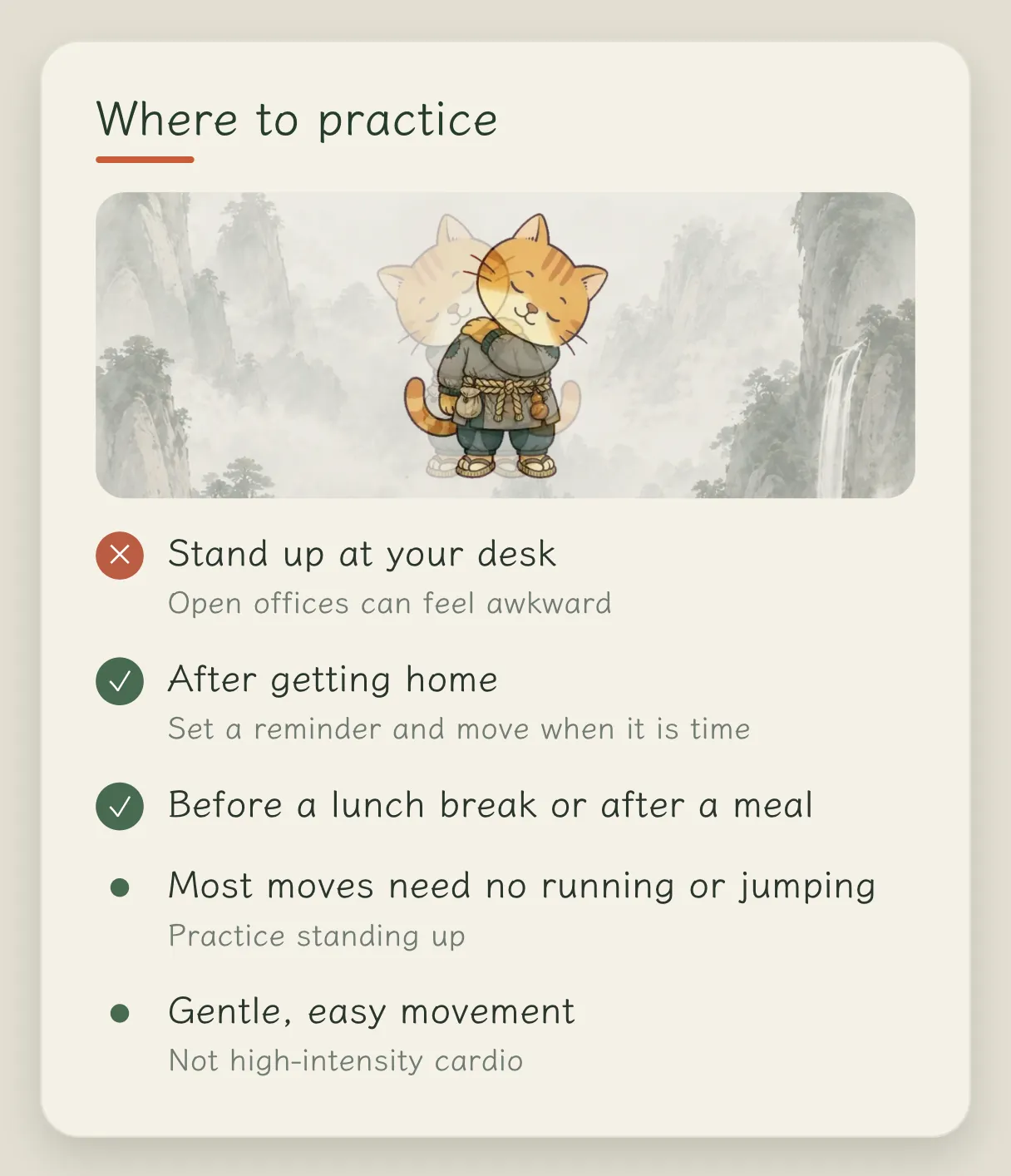
At first, what I pictured was exactly that: practicing standing next to your desk. Later I found that people feel awkward, and a lot of offices are still open-plan.
So the clearer scenario now is after you get home. Onboarding has you set a reminder and pick the time of day you're used to. Moving a little before your lunch break or after a meal works too.
Most of the movements I designed need no running or jumping and can be done standing, and the ones with a large range of motion can be skipped. It's meant to get you moving gently. If all you want is to limber up and I hand you a really intense HIIT routine, that would be wrong.
Why make it an app
After trying so many methods, how did you come to make it an app?
It came naturally. I'm an iOS developer to begin with, so there's some of holding a hammer and looking for nails in it, but I really do like packaging an experience into a complete app.
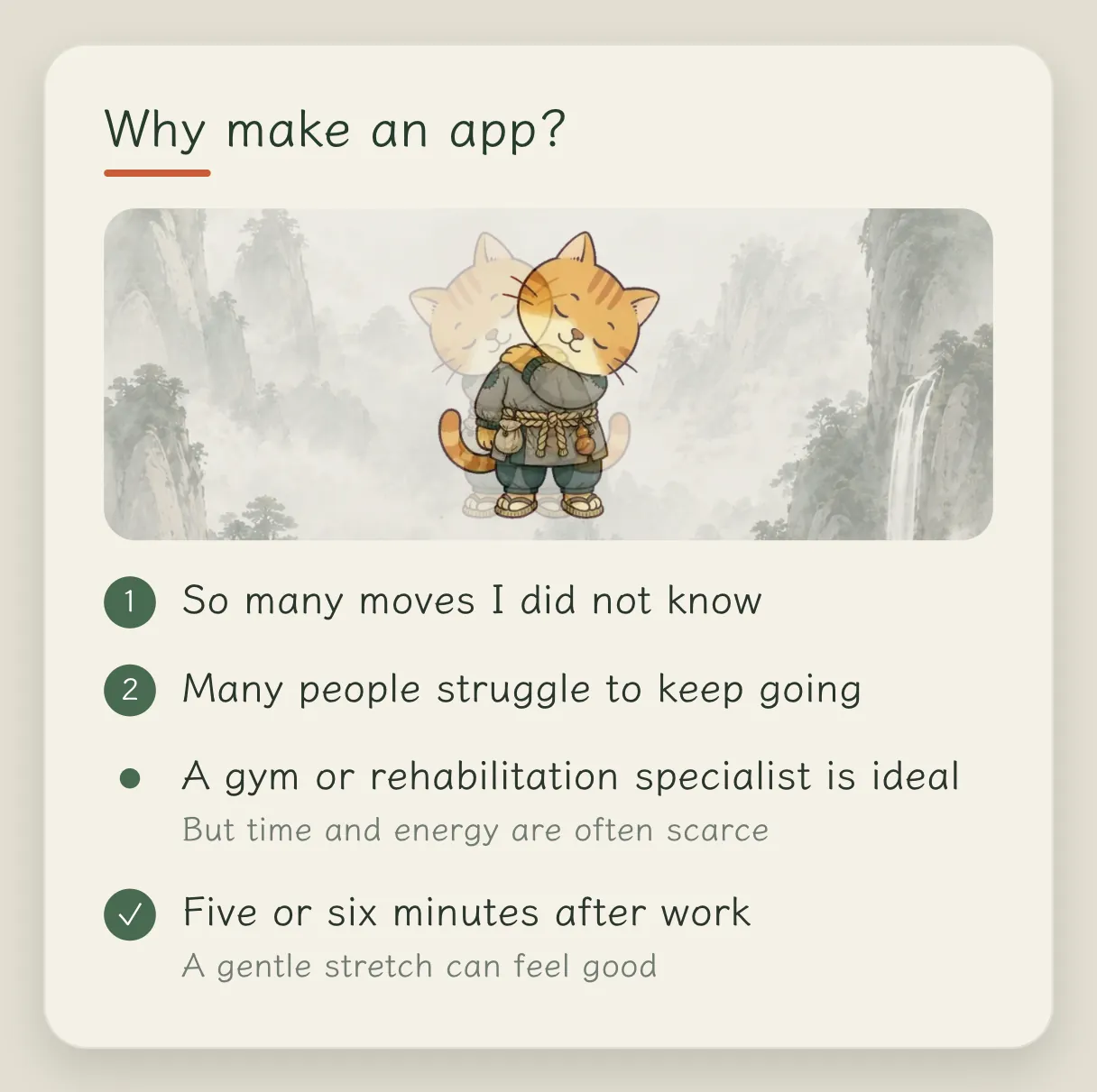
You can certainly practice by following video tutorials, but there are two difficulties. One is that you don't know there are that many movements, and the other is that you can't keep it up. Going to the gym for strength training, or having a professional plan it for you, is the ideal, but most people don't have the time or the energy for that.
So the scenario I offer is very clear: get home from work, practice for five or six minutes, feel a little soreness, and then keep doing that every day.
FAQ
How long do I need to practice each day?
A few minutes a day. A stage can be 3, 5 or 8 minutes, your choice, and intensity is Light, Standard or High Intensity.
Can I practice at the office?
Yes. Stand the phone upright at the edge of your desk and step back until you are in frame from the knees up. But many offices are open-plan and standing up to practice feels awkward, so the developer recommends after you get home instead, or before your lunch break or after a meal.
Can it help me lose weight or build muscle?
That is not what it aims for. The developer says clearly in the interview that it is not a great fit for people whose goal is weight loss, muscle gain or advanced professional training. It is light exercise that gets people who sit for long hours to loosen up their bodies every day.
Can I practice sitting down?
No. The app has no seated mode. You need to stand up so that the camera can see you from the knees up.
Related articles


Done reading? Stand up for three minutes
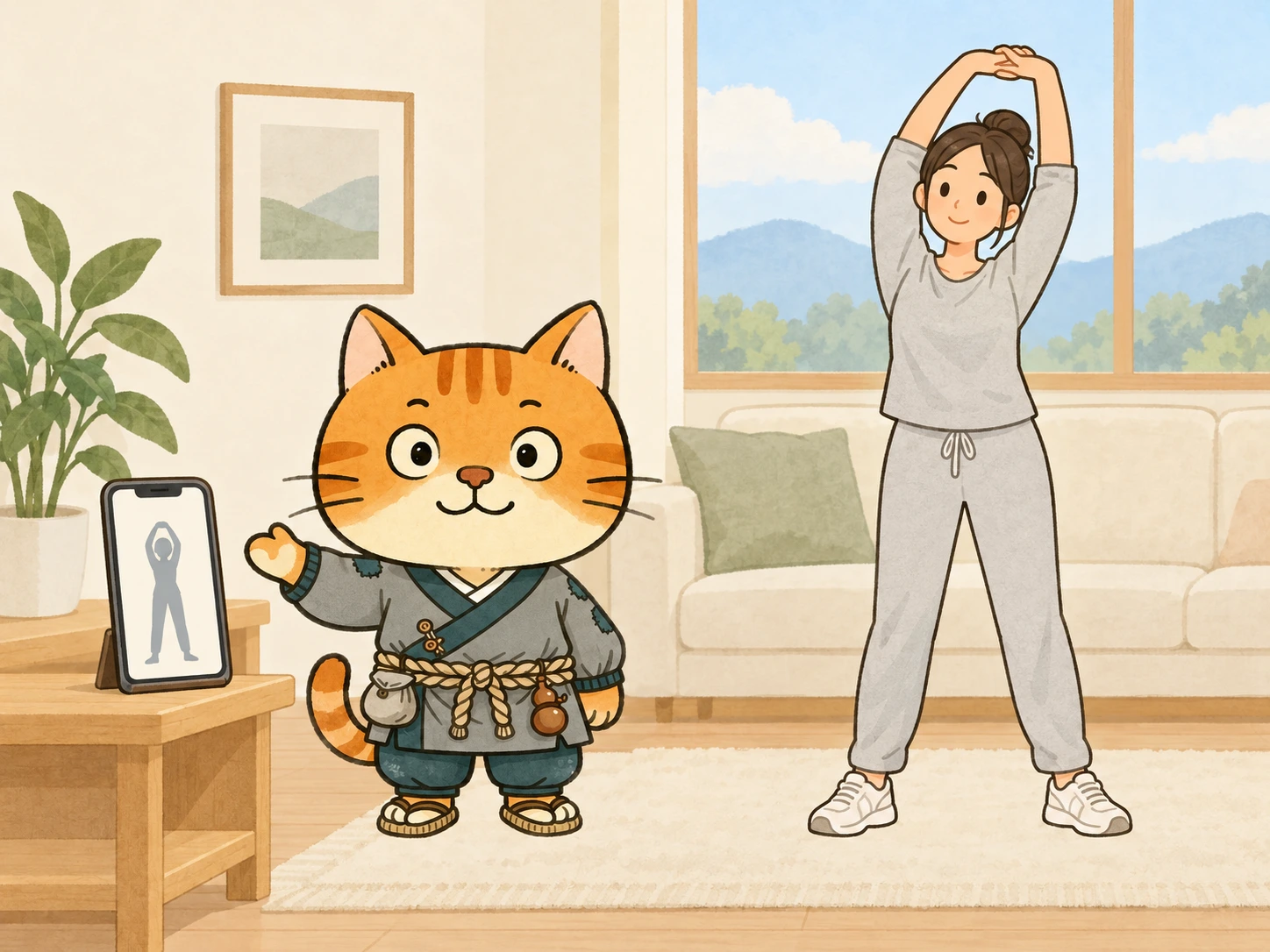
Prop your iPhone up and follow the cat for a few moves. Free to download; the annual plan includes a 7-day free trial.